

A Strategic AI Blueprint for Manufacturing Leaders
How OEE platforms can serve as the foundation for building digital twins of manufacturing facilities, setting the stage for your future AI strategy.
Manufacturing leaders want to position their business in a way to take advantage of new AI technologies. But what is the best way to begin your AI journey?
The key step you can begin taking today is building a "digital twin" of your manufacturing environment. This foundational element isn't as complex to implement as many believe, and it is absolutely essential for any successful AI strategy in manufacturing.
What is a "Digital Twin"?
A digital twin is a virtual representation of your physical manufacturing assets, processes, and systems. Think of it as a detailed, dynamic data set that mirrors your actual production environment in real-time.
Why is a digital twin so critical for AI tools at a manufacturing business?
Your digital twin will eventually serve as the "model" for your AI tools to help you make strategic business decisions or proactively address issues before they occur.
A model is the foundation that powers your AI tools. Just like public AI tools such as ChatGPT or Claude are built using massive amounts of training data, your manufacturing AI will need comprehensive data about your specific operations. Your digital twin will be this crucial training data for your future AI models, the more complete and accurate it is, the more effective your AI tools will be.
Without good data about your operations, AI tools cannot provide meaningful insights. A digital twin gives AI the complete picture it needs to truly help your business.
How will this digital twin be leveraged by AI tools?
When digital twins are eventually enhanced by artificial intelligence, manufacturers gain powerful new capabilities that transform how they operate.
Predictive Maintenance Evolution
While basic predictive maintenance focuses on individual machine health, AI-powered digital twins can analyze complex interactions across entire systems, identifying subtle patterns and correlations that human analysts would miss, and predicting not just when a single component might fail but how that failure could cascade through interconnected processes.
Virtual Process Optimization
Digital twins allow manufacturers to simulate thousands of process changes without disrupting actual production. When enhanced with AI, these simulations can autonomously identify optimal settings for maximizing throughput, minimizing waste, and ensuring quality, uncovering hidden efficiencies human engineers might never consider.
Visual Quality Monitoring with AI Cameras
AI-powered camera systems can detect costly errors and quality issues using computer vision algorithms trained on historical image data. In a packaging operation, for example, AI cameras can inspect for proper sealing, label placement, and product integrity at speeds far exceeding human capabilities.
Autonomous Optimization
The ultimate evolution of a digital twin is a system that can not only predict outcomes but autonomously implement optimizations, continuously analyzing production data, simulating improvements, and implementing the most promising changes while human operators maintain oversight of the strategic direction.
Building a Digital Twin
Building a comprehensive digital twin may seem daunting, but many manufacturers already have an excellent starting point: their Overall Equipment Effectiveness (OEE) platform. While traditionally focused on measuring availability, performance, and quality, modern OEE systems actually have the foundational data needed for an effective digital twin.
One of the most significant advantages of starting with your OEE platform is that you likely do not need to invest in new equipment. Advanced OEE systems already connect to your production environment through:
- Counting sensors providing real-time production data (photoelectric, proximity, and capacitive sensors)
- Machine status sensors detecting cycle times, downtime, and operational states
- Quality inspection systems including vision systems, weight sensors, and dimensional gauges
- Direct PLC connections pulling data directly from machine controllers
- Environmental sensors monitoring temperature, humidity, vibration, and pressure
- Power monitoring devices tracking energy consumption patterns
Sophisticated OEE platforms do more than collect raw data, they provide contextual understanding by correlating events across the production environment, which is essential for digital twins that accurately represent cause-and-effect relationships in your factory.
Starting with an OEE platform offers cultural advantages too: by introducing data-driven decision making through familiar OEE metrics, your workforce gradually becomes more comfortable relying on digital insights, a shift that's just as important as the technical foundation.
Your Strategic Blueprint for Manufacturing Success
The future of manufacturing belongs to companies that can harness AI to gain competitive advantages, but this future is not built overnight, it requires a strategic approach with digital twins at its core. Think of building your digital twin as constructing the foundation of a house: without it, any AI tools you try to implement later will be unstable and limited.
The journey from OEE to digital twin to AI-enabled manufacturing follows a practical progression: incremental investment in OEE for immediate ROI while laying the groundwork, cultural adaptation of data-driven decision making before introducing more complex concepts, and expanding data collection to build out the complete digital twin.
The manufacturers who will dominate the next decade are not waiting for perfect AI solutions to arrive. They are laying the groundwork now by building comprehensive digital twins of their operations.
Ready to transform your plant floor?
See how Essembi drives real results for your manufacturing team with a personalized demo.
More from the blog
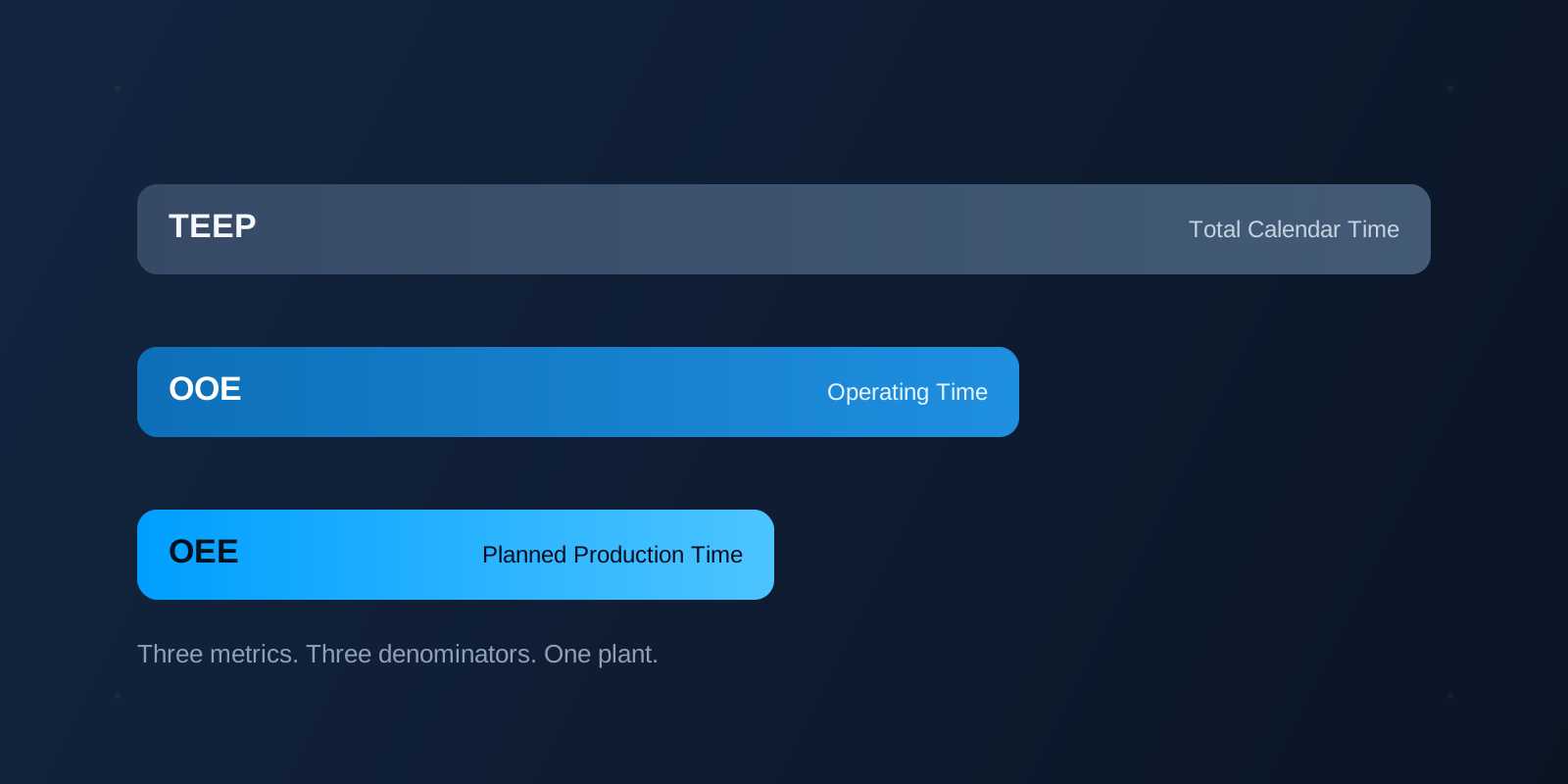
OEE vs. OOE vs. TEEP: Why One Metric Was Never Going to Be Enough
OEE tells you how well you ran the time you scheduled. OOE and TEEP reveal how much capacity you never scheduled in the first place. Here's how the three metrics fit together, who should own each one, and how to turn all three into action.
Read more
Ask Your Plant Floor Data a Question with AI
Essembi's new AI chat lets manufacturing leaders ask questions about downtime, maintenance, and quality, then dig deeper with follow-ups.
Read more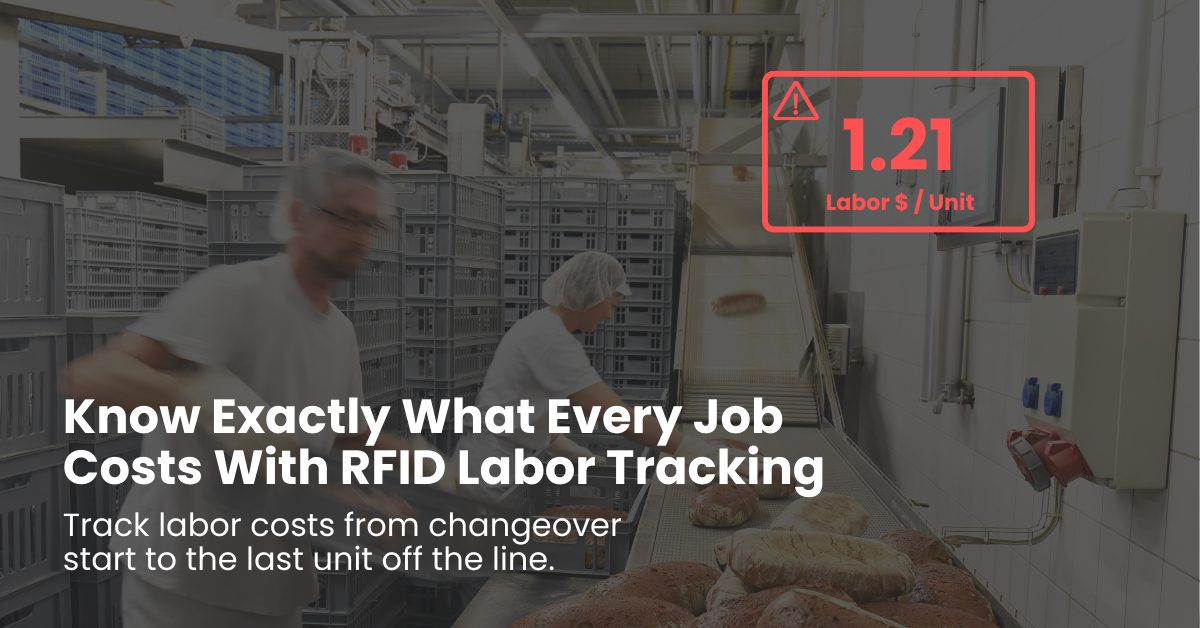
Know Exactly What Every Job Costs With RFID Labor Tracking
Track labor costs from changeover to the last unit off the line with RFID badge scanning built into Essembi.
Read more