

How OEE Drives Manufacturing Excellence Through Employee Engagement
How OEE gives manufacturing teams a single, controllable metric that motivates improvement through real-time visibility and ownership.

The Challenge of Manufacturing Metrics
Most manufacturing teams work hard but feel disconnected from the metrics used to evaluate their performance. Annual goals often include targets that production operators cannot directly control, shipment volumes depend on sales, production schedules come from planning, and material availability sits with procurement. When teams are measured against numbers they cannot influence, motivation suffers.
The solution is to give production teams a metric they own completely. Overall Equipment Effectiveness (OEE) provides exactly that.
What is OEE?
Overall Equipment Effectiveness is a single percentage that measures how well a production line converts scheduled time into quality product. It combines three factors: OEE = Availability × Performance × Quality.
- Availability measures actual run time against scheduled time (accounts for downtime)
- Performance measures actual production rate against standard rate (accounts for slow cycles)
- Quality measures good units against total units produced (accounts for rejects and rework)
OEE gives you one number that captures how effectively your equipment and team are operating.
Why OEE Motivates: Ownership and Control
OEE is directly within the production team's control. Operators control when equipment runs, how fast it runs, and the quality of output. Poor sales forecasts do not impact OEE. Late material deliveries do not affect OEE. Inadequate production scheduling does not change OEE scores.
This is fundamentally different from most manufacturing KPIs. When a team misses a shipment target because sales oversold capacity, they feel powerless. OEE eliminates that problem, the production team controls all three components, which creates accountability without blame.
Making it Visible: Real-Time Transparency
Displaying OEE data on TVs throughout the warehouse transforms the metric from a report into a live scoreboard. Operators see their impact immediately, whether it's current job OEE, shift-by-shift OEE, or supporting metrics like run rate, downtime duration, and scrap count.
Real-time visibility creates a feedback loop. An operator adjusts a process parameter and sees performance improve within minutes. Visible metrics also build team accountability, shifts develop pride in their performance and compete in a healthy way to achieve the best scores.
Customization for Fairness and Realism
Not all production lines are equal. Setting different OEE targets by product type and line keeps the metric fair and motivating, a manual line might target 65% OEE while an automated line targets 85%. One-size-fits-all targets demotivate: if every line must hit 80% regardless of automation level, manual operations will never succeed and automated lines will coast.
Targets should account for automation level, changeover frequency, process complexity, and known equipment limitations.
Additional Benefits
- Immediate feedback loop — operators do not wait for a monthly report to learn how they performed
- Common language — OEE creates shared terminology across operators, supervisors, and plant management
- Problem identification — the breakdown into availability, performance, and quality points directly to where to focus
- Recognition opportunities — clear, objective metrics provide a fair basis for recognizing high performers
Utilizing OEE in Daily Operations
OEE becomes most powerful when integrated into regular team communication. Daily standup meetings should review the previous day's performance and set targets for the current day. Shift change reviews should brief incoming shifts on current trends, open issues, and adjustments made, keeping improvement efforts moving forward across shift boundaries.
Implementation Considerations
- Involve operators in target setting — they understand equipment and process constraints better than anyone
- Train teams on their influence — connect daily tasks to availability, performance, and quality scores
- Ensure data accuracy — trust in OEE depends on it
- Introduce corrective actions — platforms like Essembi let operators log corrective actions and CAPAs directly, turning OEE from a measurement system into a continuous improvement system
Conclusion: From Measurement to Motivation
OEE works as a motivational tool because it gives production teams what they need most: control, visibility, and fairness. It shifts the conversation from "we didn't hit our numbers" to "here's what we improved today and here's what we're working on tomorrow."
The result is a workforce that takes ownership of performance because the metric finally belongs to them.
Ready to transform your plant floor?
See how Essembi drives real results for your manufacturing team with a personalized demo.
More from the blog
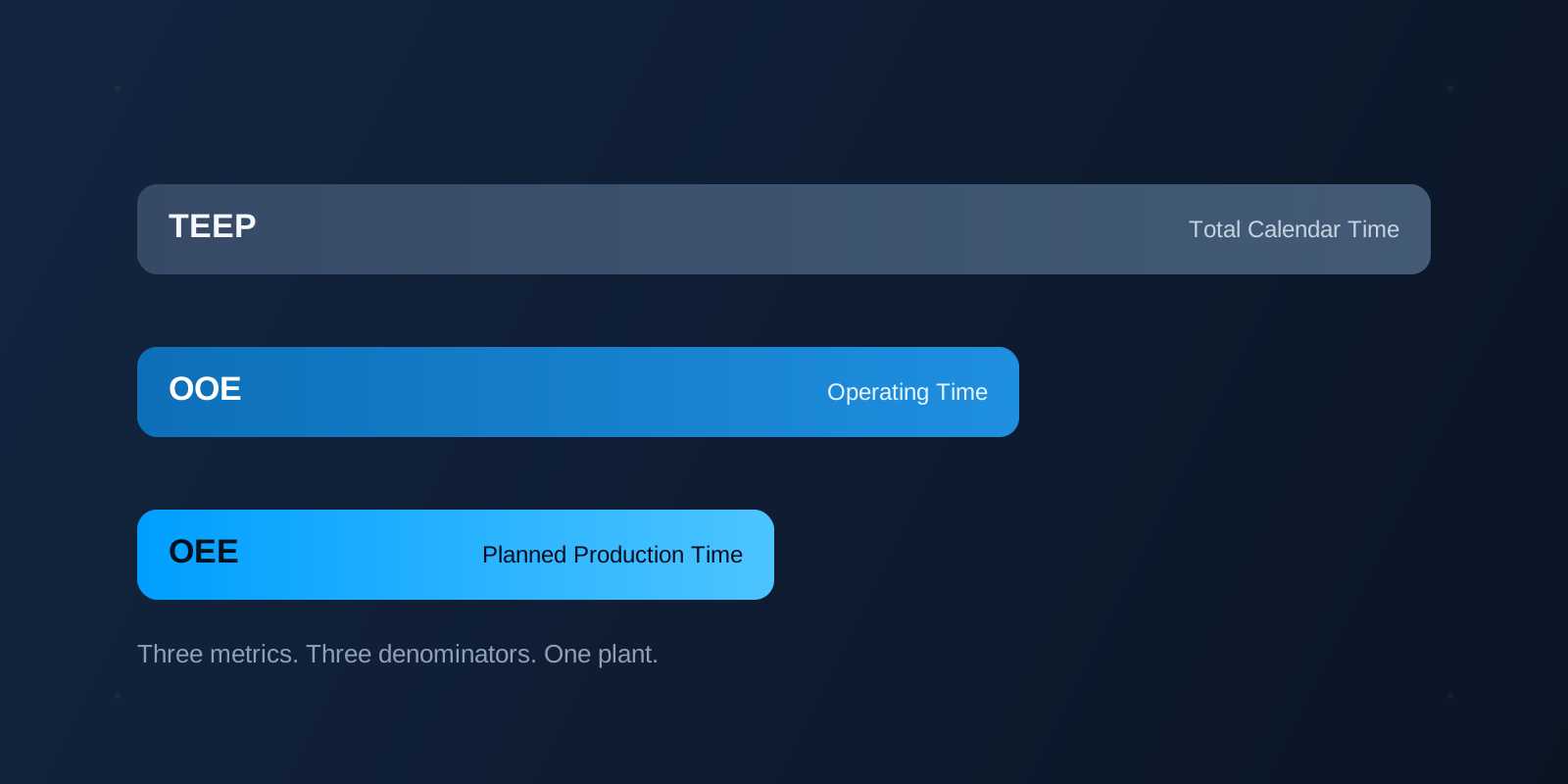
OEE vs. OOE vs. TEEP: Why One Metric Was Never Going to Be Enough
OEE tells you how well you ran the time you scheduled. OOE and TEEP reveal how much capacity you never scheduled in the first place. Here's how the three metrics fit together, who should own each one, and how to turn all three into action.
Read more
Ask Your Plant Floor Data a Question with AI
Essembi's new AI chat lets manufacturing leaders ask questions about downtime, maintenance, and quality, then dig deeper with follow-ups.
Read more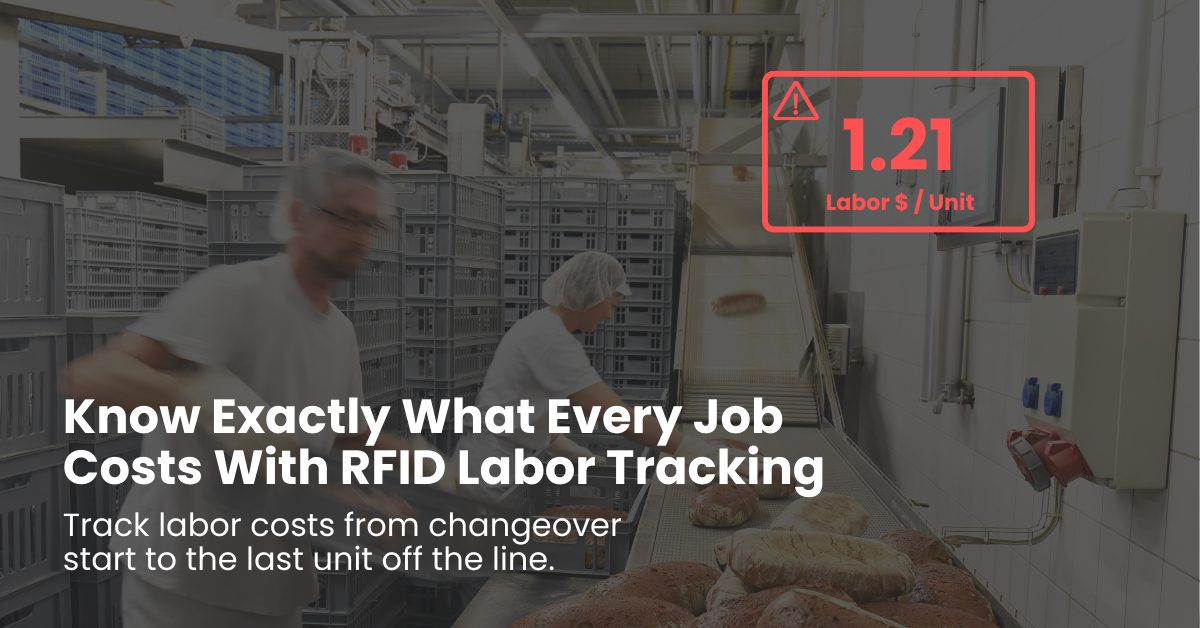
Know Exactly What Every Job Costs With RFID Labor Tracking
Track labor costs from changeover to the last unit off the line with RFID badge scanning built into Essembi.
Read more