

Maximizing Manufacturing Productivity: Strategies for the Modern Factory
7 strategies modern factories use to reduce downtime, optimize workflows, and maximize output per shift.

In today's competitive manufacturing landscape, productivity is the key differentiator between thriving operations and those struggling to stay afloat. As market demands intensify and margins tighten, manufacturers who implement effective productivity strategies gain a decisive advantage in cost efficiency, quality, and customer satisfaction.
This guide explores proven approaches to measuring, analyzing, and improving manufacturing productivity, practical strategies that help streamline operations, reduce waste, and optimize resource utilization across your factory floor.
Understanding Manufacturing Productivity
Manufacturing productivity measures how efficiently your operation converts inputs (labor, materials, energy, capital) into valuable outputs. At its essence, productivity is about getting more from less, producing more goods with fewer resources, in less time, and at lower cost.
High productivity operations share several key characteristics: minimal waste in materials, motion, and processes; optimized workflows that eliminate bottlenecks and delays; efficient resource allocation; reliable equipment with minimal unplanned downtime; and an engaged workforce with clear performance visibility.
Key insight: manufacturing productivity isn't just about producing more, it's about producing smarter. The most successful manufacturers focus on eliminating waste in all its forms: wasted materials, wasted movement, wasted time, and wasted potential.
Measuring Productivity: Essential Metrics and Calculations
To improve manufacturing productivity, you must first measure it accurately.
- Overall Equipment Effectiveness (OEE) = Availability × Performance × Quality. World-class OEE is considered 85% or higher, though many factories operate at 60% or below.
- Labor Productivity = Total Output / Total Labor Hours
- Throughput Rate = Total Units Produced / Time Period
- Cycle Time = Production Time / Number of Units Produced
- First Pass Yield = (Units Produced - Defective Units) / Units Produced × 100%
Common Barriers to Productivity
Equipment-related: unplanned downtime, long changeover times, suboptimal performance, and outdated technology.
Process-related: bottlenecks, excessive inventory, quality issues, and inefficient layouts.
People-related: skills gaps, low engagement, poor communication, and resistance to change.
Data-related: limited visibility, manual reporting, siloed information, and a reactive rather than preventive approach.
7 Proven Strategies to Boost Manufacturing Productivity
1. Implement Lean Manufacturing Principles — value stream mapping, 5S workplace organization, kaizen, just-in-time production, and error-proofing (poka-yoke).
2. Prioritize Preventive Maintenance — scheduled maintenance, condition monitoring, predictive maintenance, and Total Productive Maintenance (TPM).
3. Optimize Changeover Processes — SMED (single-minute exchange of die), parallel activities, standardized procedures, and dedicated changeover teams.
4. Enhance Workforce Development — skills training, cross-training, performance feedback, and recognition programs.
5. Implement Real-Time Performance Monitoring — digital production boards, automated data collection, exception alerts, and performance analytics.
6. Optimize Factory Layout and Material Flow — cellular manufacturing, point-of-use storage, one-piece flow, and visual management.
7. Foster a Culture of Continuous Improvement — idea systems, problem-solving teams, daily huddles, and visible metrics.
How OEE Platforms Drive Productivity Gains
Modern OEE platforms automatically calculate and visualize the key metrics that drive manufacturing excellence. Real-time performance monitoring tracks OEE and its components live, displays production counts and downtime events, and alerts supervisors instantly when performance falls below expected levels. Automated data collection connects directly to machines via PLC integration or sensors, eliminating manual entry and ensuring accuracy.
Conclusion: The Productivity Advantage
In today's competitive manufacturing environment, productivity excellence isn't optional, it's essential for survival and growth. The manufacturers who systematically eliminate waste, optimize processes, and leverage technology gain substantial advantages in cost, quality, and customer responsiveness.
Next steps: start your productivity journey today by calculating your current OEE and identifying your biggest sources of loss. Even a 5% improvement in productivity can translate to significant bottom-line benefits while building momentum for further enhancements.
Ready to transform your plant floor?
See how Essembi drives real results for your manufacturing team with a personalized demo.
More from the blog
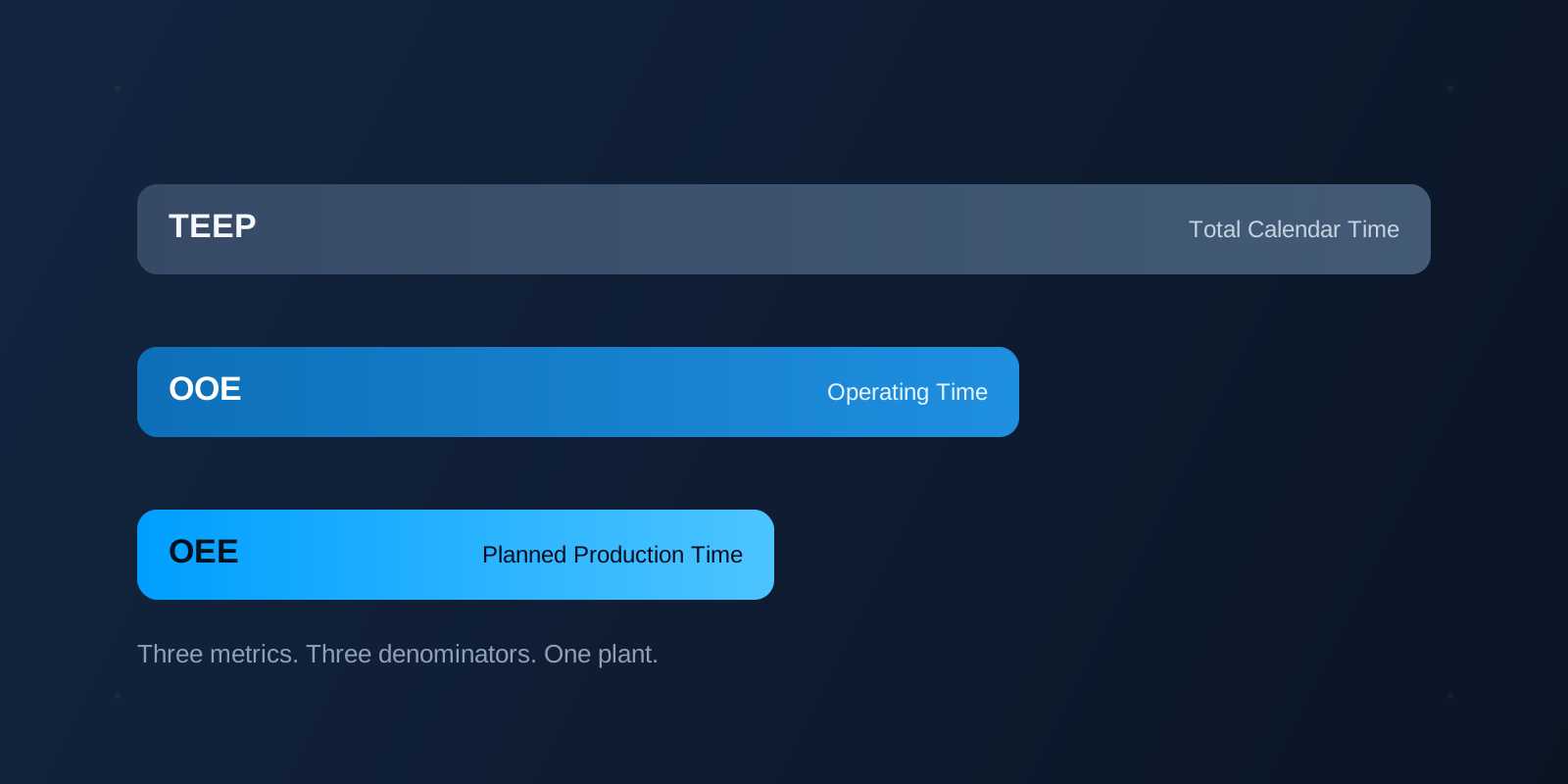
OEE vs. OOE vs. TEEP: Why One Metric Was Never Going to Be Enough
OEE tells you how well you ran the time you scheduled. OOE and TEEP reveal how much capacity you never scheduled in the first place. Here's how the three metrics fit together, who should own each one, and how to turn all three into action.
Read more
Ask Your Plant Floor Data a Question with AI
Essembi's new AI chat lets manufacturing leaders ask questions about downtime, maintenance, and quality, then dig deeper with follow-ups.
Read more
Know Exactly What Every Job Costs With RFID Labor Tracking
Track labor costs from changeover to the last unit off the line with RFID badge scanning built into Essembi.
Read more