

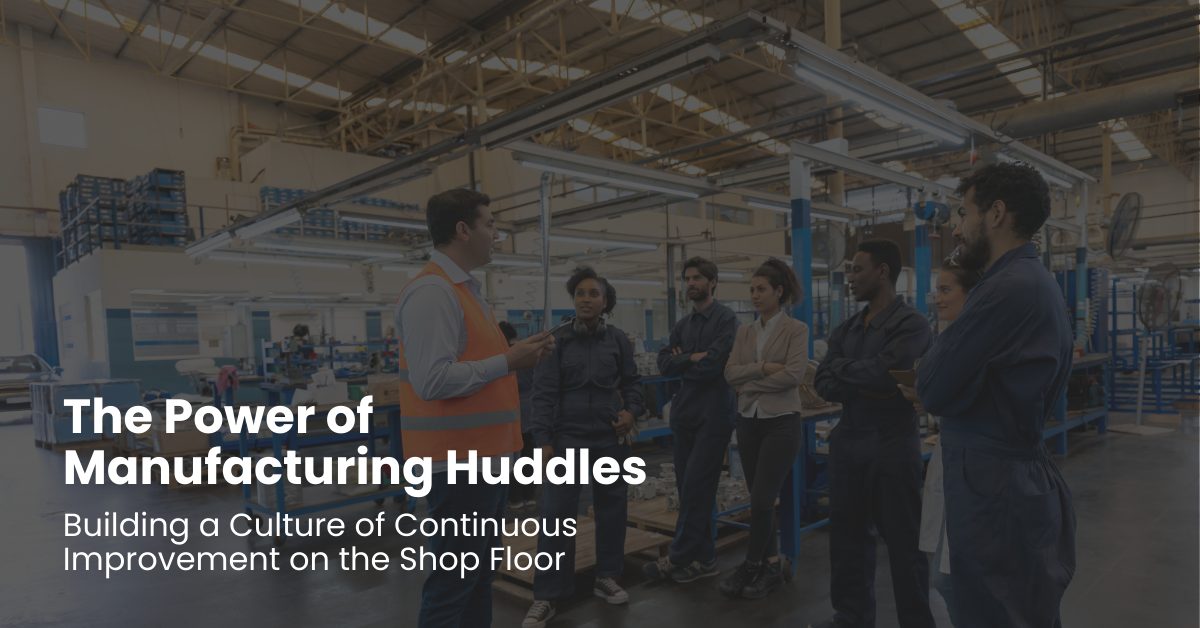
The Power of Manufacturing Huddles: Building a Culture of Continuous Improvement on the Shop Floor
How start and mid-shift team huddles drive continuous improvement, boost efficiency, and build engaged manufacturing teams that deliver results.
In manufacturing environments where every minute of downtime matters and every improvement compounds over time, the humble team huddle has emerged as one of the most powerful tools for operational excellence. Yet many organizations still treat huddles as optional check-ins rather than the strategic communication ritual they should be.
The modern manufacturing floor is a complex ecosystem where quality, efficiency, safety, and maintenance concerns intersect constantly. Information silos between departments can cost thousands of dollars in lost productivity, quality issues, or safety incidents. Team huddles break down these silos by creating structured moments where knowledge flows freely across functional boundaries.
But the real power of huddles isn't just in information sharing, it's in building a culture where every team member feels ownership over outcomes and empowered to drive improvement.
The Strategic Timing: Start and Mid-Shift Huddles
Many manufacturing operations have discovered that one huddle per shift isn't enough. The most effective teams implement two critical touchpoints: start-of-shift and mid-shift check-ins.
Start-of-Shift Huddles: Setting the Foundation
The start-of-shift huddle is where context is established. This is the moment to review what happened on the previous shift, not just the numbers, but the story behind them. What issues emerged? What solutions were tried? What problems remain unresolved and need focused attention?
This is also the critical window for reviewing historical context from previous production runs. If the parts being manufactured today have been run before, what challenges surfaced then? Were there dimensional issues, tooling concerns, or material inconsistencies? Sharing this institutional knowledge prevents teams from rediscovering problems the hard way.
Mid-Shift Check-ins: Course Correction in Real Time
The mid-shift huddle serves a different purpose: it's a pulse check and course correction opportunity. Production plans rarely survive first contact with reality unchanged. Equipment behaves unexpectedly, quality issues surface, or supply chain disruptions force adaptation.
Mid-shift huddles create a structured moment to acknowledge when plans need adjustment and to marshal resources before small problems become shift-ending crises. They also provide a second opportunity to recognize wins and maintain momentum when things are going well.
Cross-Functional Participation: Breaking Down Silos
The composition of huddle participants matters enormously. The most effective huddles bring together diverse perspectives:
- Line supervisors who understand production flow and bottlenecks
- Quality team members who can spot emerging trends before they become systemic issues
- Maintenance personnel who know which equipment is running on borrowed time
- Safety representatives who can identify hazards and near-misses
When these perspectives converge regularly, patterns emerge that no single person could see. The quality technician notices that defects cluster around a particular time of day. The maintenance tech realizes that the temperature swings correlate with the equipment issues the line supervisor has been reporting. The safety rep connects the dots between rushed changeovers and near-miss incidents.
This cross-pollination of knowledge transforms huddles from status updates into strategic problem-solving sessions.
The Psychological Contract of Huddles
Effective huddles establish an unspoken agreement: everyone's input matters, and everyone shares responsibility for outcomes. When a quality technician feels comfortable raising concerns in a huddle attended by supervisors and maintenance, that's psychological safety in action. When a line operator's suggestion gets implemented before the next shift, that's empowerment made tangible.
Celebrating Wins: The Foundation of Improvement Culture
Every huddle should start with wins. Not because toxic positivity demands it, but because recognizing progress reinforces the behaviors that create progress.
What counts as a win? Anything that moves the operation forward:
- Throughput improvements on a challenging line
- Proactive identification of a quality issue before parts shipped
- Successful implementation of a process improvement
- Smooth execution of a difficult changeover
- Creative problem-solving that prevented downtime
The key is specificity. "Good job, everyone" lands differently than "Line 3 increased throughput by 15% yesterday through the worker flexibility initiative that Jorge suggested last week." The latter tells a story, recognizes specific contribution, and reinforces that ideas from the floor matter.
Shout Outs: Making Heroes Visible
While wins are team achievements, shout outs recognize individual excellence. They make visible the often-invisible work of people who go above and beyond.
The most impactful shout outs recognize specific behaviors you want to see repeated, from a technician who flagged an unusual vibration before it caused downtime, to a cross-functional root-cause fix, to someone submitting three improvement ideas in a week, to a teammate training two new hires while keeping their own station at full capacity.
Shout outs serve a dual purpose: they recognize the individual receiving praise and they signal to everyone else what excellence looks like in your operation.
Identifying Opportunities: The Continuous Improvement Lens
After celebrating wins, effective huddles turn to opportunities for improvement. This framing matters, calling something an "opportunity" rather than a "problem" shifts the conversation from blame to possibility.
The best improvement opportunities often surface from the front line. Operators live with inefficiencies that supervisors never see. Quality technicians spot patterns that get lost in aggregate data. Maintenance teams know which workarounds are masking systemic issues.
Creating space in huddles for these observations does two things: it captures valuable intelligence about how to boost efficiency, and it reinforces that everyone's expertise matters. When a line operator's suggestion about rearranging tools to reduce reach distance shaves 30 seconds off cycle time, that's a win. When that operator sees their suggestion implemented within days, that's how you build engagement.
Identifying opportunities is meaningless without a clear path to action. Effective huddles include a simple mechanism for tracking suggested improvements: who owns it, what the timeline is, and how success will be measured. This doesn't require complex project management systems, a visible board with cards moving through "Suggested," "In Progress," and "Implemented" can be remarkably effective. The key is visibility, everyone needs to see that suggestions lead to action.
The Metrics Connection: How Huddles Drive Performance
While huddles shouldn't become pure data-reading exercises, connecting daily actions to key performance metrics is essential. The most effective teams understand how their micro-decisions and improvements flow through to macro outcomes.
When teams discuss reducing changeover time in a huddle and then see overall equipment effectiveness (OEE) tick upward the following week, cause and effect become tangible. When proactive quality checks catch issues that would have resulted in scrap, and teams can see the cost savings, the abstract becomes concrete.
Huddles create the narrative thread that connects individual actions to organizational outcomes. They answer the fundamental question every team member asks: "Does what I do matter?" When the answer is demonstrably yes, engagement follows.
Learning from Issues: The Previous Shift and Historical Context
One of the most valuable but often neglected aspects of huddles is systematic review of previous issues, at the shift-to-shift handoff level (what does the incoming team need to know, was there a quality escape, is equipment running differently than normal) and at the historical production data level (what do past runs of this part tell us about dimensional drift, tooling problems, or material inconsistencies).
Manufacturing organizations often struggle with institutional memory. Experienced workers carry knowledge that never gets documented, and the same problems get solved repeatedly because solutions aren't captured and shared. Huddles, particularly when paired with simple documentation systems, become the mechanism for building and maintaining institutional memory.
Making Huddles Stick: The Implementation Reality
The value of huddles is clear in theory, but implementation is where many organizations stumble. A few factors make or break huddle effectiveness: consistency (huddles only work when they're non-negotiable), duration (start-of-shift huddles running 10 to 15 minutes, mid-shift check-ins 5 to 10), structure (a consistent format of wins, issues, opportunities, shout outs, and handoff items), and psychological safety (whether people feel safe speaking up at all).
The Broader Impact: Culture Transformation
Organizations that implement effective huddles discover something interesting: the benefits extend far beyond the immediate tactical value of information sharing. Huddles become the daily expression of organizational values. When cross-functional participation is the norm, silos break down. When wins are celebrated consistently, a culture of recognition emerges. When opportunities are treated as possibilities rather than problems, a growth mindset takes root.
Over time, these daily rituals reshape organizational culture. Knowledge flows more freely. Problems surface and get resolved faster. People feel more connected to outcomes and to each other.
The Compounding Effect of Small Improvements
There's nothing revolutionary about gathering a team for 10 minutes at the start of a shift. The power of huddles comes from the compounding effect of small, consistent improvements in communication, problem-solving, and culture.
The question isn't whether your organization can afford to implement effective huddles. The question is whether you can afford not to. The most sophisticated manufacturing execution systems and process improvement methodologies in the world can't compensate for poor communication and disengaged teams. But a group of people who gather twice per shift to share knowledge, recognize excellence, solve problems, and drive improvement? That's the foundation on which operational excellence is built.
Ready to transform your plant floor?
See how Essembi drives real results for your manufacturing team with a personalized demo.
More from the blog
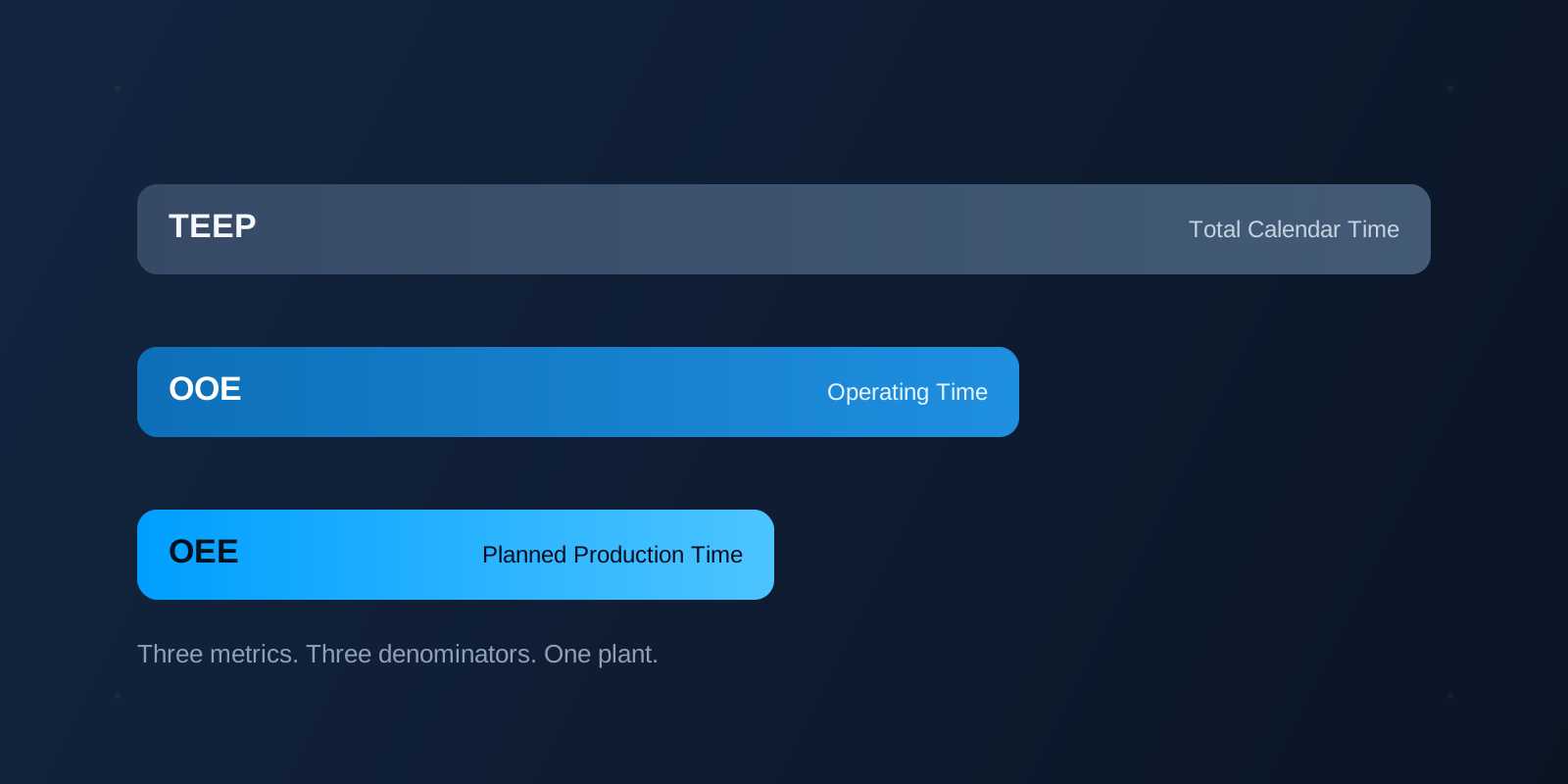
OEE vs. OOE vs. TEEP: Why One Metric Was Never Going to Be Enough
OEE tells you how well you ran the time you scheduled. OOE and TEEP reveal how much capacity you never scheduled in the first place. Here's how the three metrics fit together, who should own each one, and how to turn all three into action.
Read more
Ask Your Plant Floor Data a Question with AI
Essembi's new AI chat lets manufacturing leaders ask questions about downtime, maintenance, and quality, then dig deeper with follow-ups.
Read more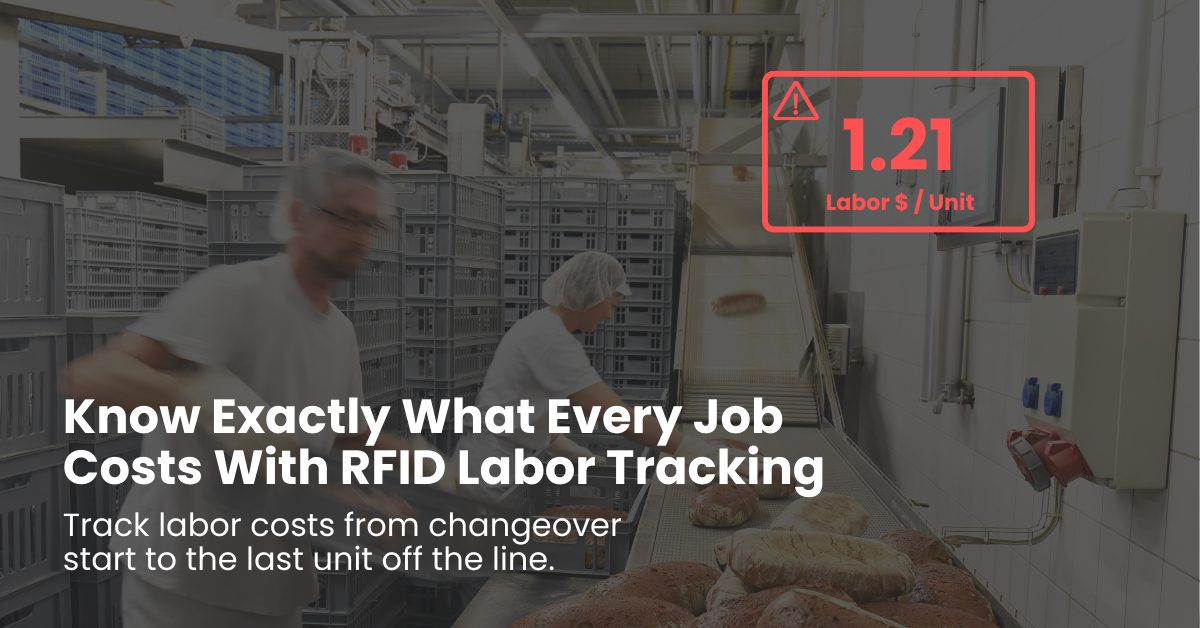
Know Exactly What Every Job Costs With RFID Labor Tracking
Track labor costs from changeover to the last unit off the line with RFID badge scanning built into Essembi.
Read more